
Reebok's Silent Comeback...
From music and football to basketball, here's how Reebok is reconnecting with the communities that made it iconic...

Happy new week!
There was once a time when Reebok was at the epicentre of sport and street culture.
Throughout the 1980s and 1990s, the brand was one of the biggest names in footwear, worn on football pitches, basketball courts and the streets of major cities. At one stage it even outsold Nike, becoming the world’s largest sportswear brand. Much of that success came from understanding cultural movements before they became mainstream. Their launch of the Reebok Freestyle in 1982 was perfectly aligned with the booming rise of women’s aerobics and fitness, which propelled the brand into households around the world.
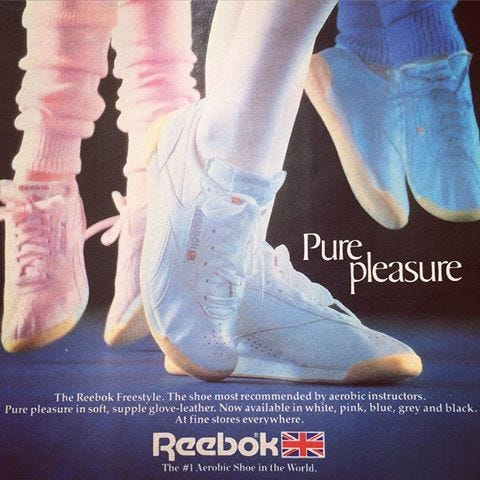
The years that followed looked very different.
When adidas acquired Reebok for $3.8 billion in 2005, the intention was to strengthen its position against Nike. Instead, Reebok gradually became more narrowly positioned. The brand’s exclusive NBA and NHL uniform rights were absorbed into adidas, major football partnerships came to an end, and its focus shifted almost entirely towards fitness through partnerships with CrossFit and the UFC. By the mid 2010s, Reebok had largely disappeared from many of the cultural spaces that had once defined it.
That changed in 2022 when Authentic Brands Group acquired Reebok from adidas for $2.5 billion, restoring the brand’s operational independence. Since then, Reebok has begun re-establishing itself across music, football and basketball, categories that played a significant role in its history.
One of the clearest examples has been its recent UK campaign, Born Classics, Worn for Life, fronted by South London rapper K-Trap.
The campaign centres around the Workout Plus, a silhouette that has been part of British street culture since the late 1980s. Originally designed as a training shoe, the Workout Plus quickly moved beyond the gym, finding its way onto football terraces, rave dance floors and into everyday streetwear.
The campaign film, titled The Give Back, takes inspiration from classic British heist films, but instead of stealing something, K-Trap spends the story giving back to the communities that helped make it an icon. Figures from different generations of British culture, including UK Garage pioneers MC Bushkin and Lisa Maffia, alongside EastEnders actress Laila Morse, better known as Big Mo.
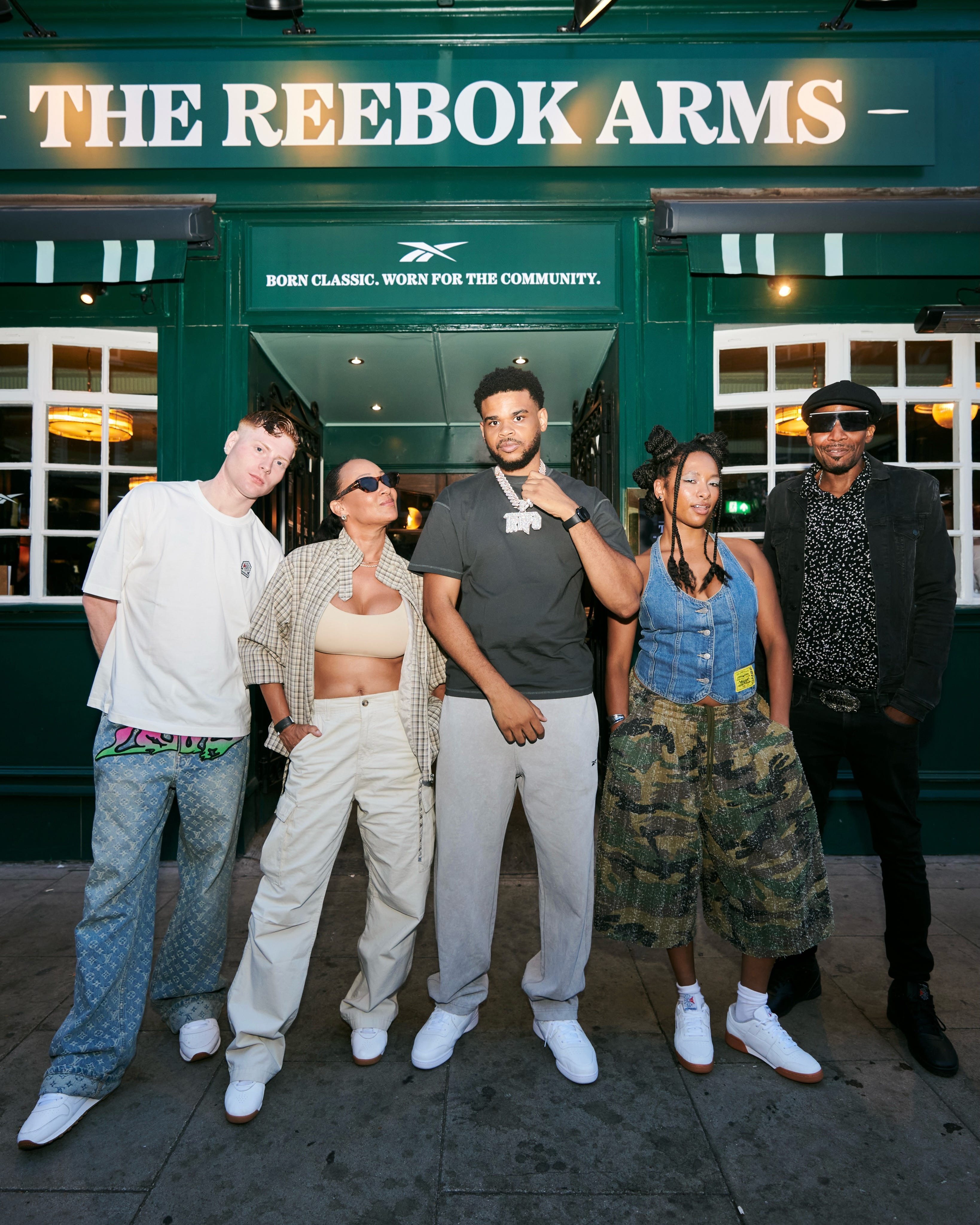
The campaign extends beyond film. Reebok also opened The Reebok Arms, a temporary branded London pub featured within the campaign itself, further bringing the story into the real world.
At the same time, Reebok has begun rebuilding its presence within football.
The brand is leading with a strong athlete trio validating their latest booth the Sidewinder. Juventus striker Dušan Vlahović leads the global campaign for the boot, with Chelsea defender Trevoh Chalobah introducing the product in elite European tournaments and Southampton Women’s goalkeeper Kayla Rendell being the face of Reebok’s expansion into the women’s game. Legend Iker Casillas unites them as a global ambassador, bridging heritage nostalgia with modern on-pitch performance
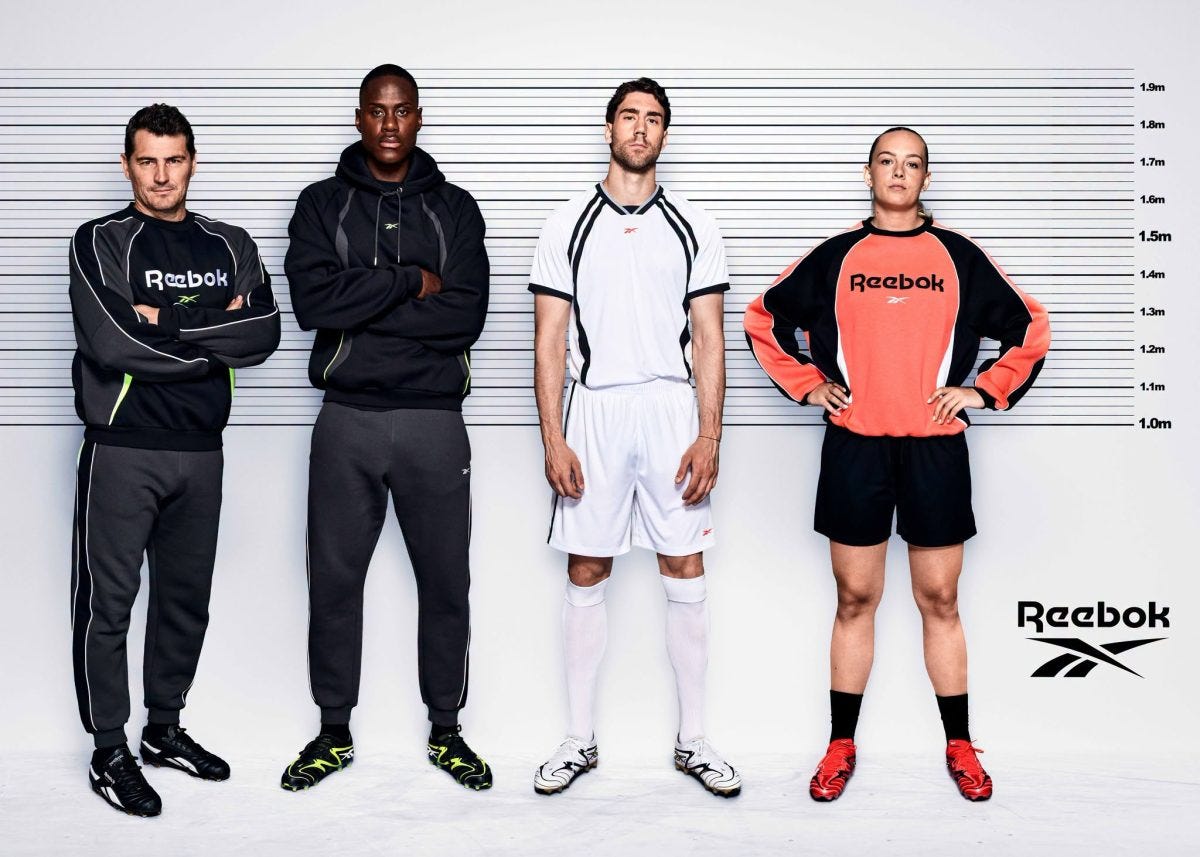
Beyond individual players, Reebok has also increased its visibility through club and federation partnerships. The brand currently supplies kits for Charlton Athletic and MK Dons, while internationally becoming the official kit supplier of the Panama national football team, placing Reebok on one of football’s biggest stages at the 2026 FIFA World Cup.
Reebok is also following a similar approach in Basketball.
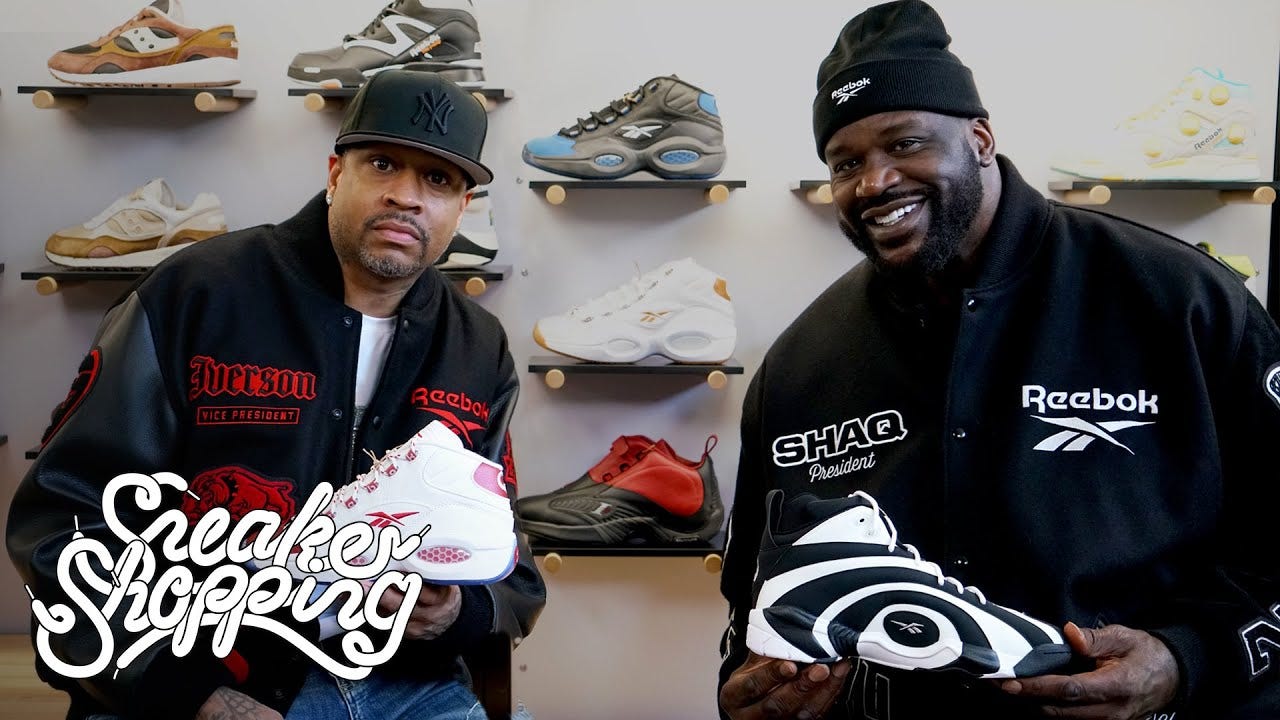
Reebok was once deeply embedded within basketball culture, particularly throughout the 1990s and early 2000s, when athletes such as Allen Iverson helped define the brand’s identity. Today, Shaquille O’Neal serves as President of Reebok Basketball, with Allen Iverson returning as Vice President, overseeing the next chapter of the category.
Rather than focusing solely on former stars, Reebok has combined experienced leadership with investment in emerging talent. Its latest We Rise campaign introduces NBA and WNBA prospects including Darius Acuff Jr., Nate Ament and Lauren Betts. Combined with established athletes such as Angel Reese, DiJonai Carrington and Lexie Brown already on its roster, Reebok is building a balanced line up of current stars and future faces of the game.
Rather than concentrating its efforts in a single category, Reebok is rebuilding across the areas that originally shaped the brand: music, football and basketball. Its heritage gives the brand credibility, but heritage alone isn’t enough. While many millennials remember Reebok at its peak, much of Gen Z, and certainly the generations that follow, don’t have the same emotional connection to those moments or the icons who defined them.
That’s why Reebok’s recent strategy is interesting. Alongside celebrating its past, the brand is investing in today’s musicians, athletes and emerging talent to create a new generation of cultural relevance. The challenge isn’t simply to remind people what Reebok once was, but to give new audiences a reason to care about what it is becoming.
As brands continue competing for relevance among younger audiences, Reebok’s approach is a reminder that heritage should be the foundation, not the strategy. The brands that endure are the ones that respect their history while continuing to earn their place in culture through the communities, creators and athletes shaping what’s next.
At Divrse Media, this is exactly the work we do. We help brands earn relevance with youth audiences through cultural insight, strategy and community-led activations. If you’re looking to build stronger connections with Gen Z, book a 1:1 call or simply reply to this email. We’d love to explore how we can help.